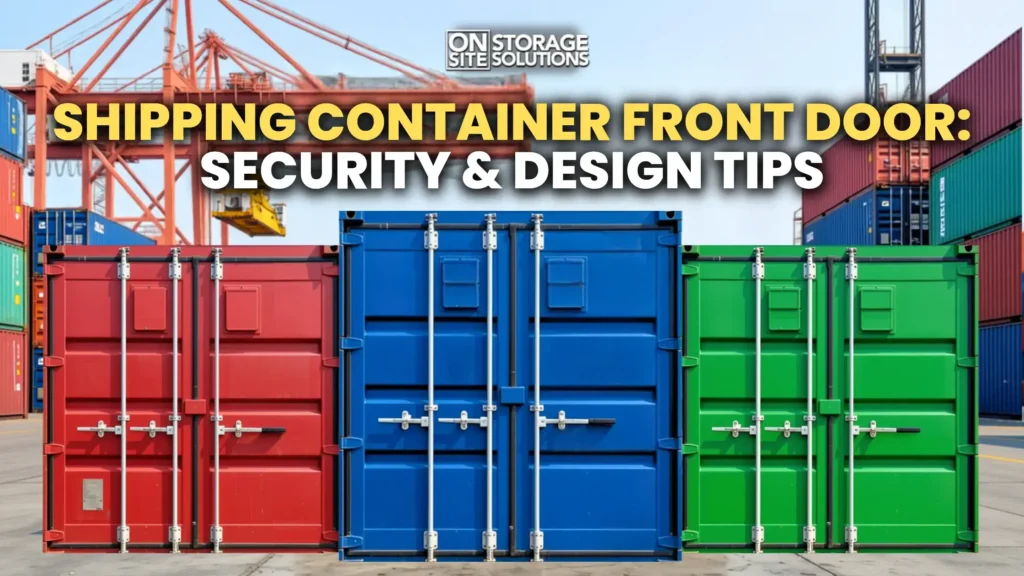


The shipping container front door is more than an entry point. It is the defining feature that transforms a standard steel box into a secure storage hub, a retail pop-up, a mobile office, or a customized workspace. When approached with strategic thinking and creative design, this single structural element becomes the gateway to performance, safety, and brand expression.
In today’s on-site storage and modular construction industries, attention to the entrance design drives usability and customer satisfaction. Smart upgrades and thoughtful planning can unlock significant value from every Shipping container installation.
Why the Shipping Container Front Door Shapes Performance
Security Power of the Shipping Container Front Door
A well-designed shipping container front door establishes the first layer of defense. Built from iindustrial-gradesteel, it is engineered to resist impact and forced entry. Integrated robust locks, reinforced locking bars, and hheavy-dutyhinges create a reliable barrier that protects valuable contents.
Security goes beyond steel thickness. Modern modifications include lock boxes, tamper-resistant seals, and electronic access systems that elevate protection standards. These enhancements allow operators to secure equipment, retail goods, or sensitive documents with confidence.
The structure of the entrance also supports stacking stability during transport. When containers are positioned vertically in ports or storage yards, the door frame contributes to the structural integrity of the entire unit.
Efficiency Starts at the Shipping Container Front Door
Operational flow improves dramatically when the entrance is optimized. The double swing configuration allows quick loading and unloading, reducing downtime and labor strain. Wide access simplifies forklift operations and pallet handling.
In commercial environments, upgrading the main entry system improves workflow inside temporary offices and pop up retail stores. Smooth opening mechanisms and durable seals reduce friction in daily use.
Airtight seals prevent moisture intrusion, helping protect electronics, documents, and climate-sensitive inventory. This feature becomes even more critical in humid coastal regions or high rainfall areas.
Creative Design Strategies for Container Entry Systems
Customizing the Shipping Container Front Door for Modern Spaces
The era of plain steel exteriors has evolved. Today, modifying shipping containers opens creative opportunities to redesign entrances into statement pieces. Glass panels, steel-framed windows, and powder-coated finishes transform industrial aesthetics into contemporary architecture.
Retail brands often treat the shipping container front door as a marketing canvas. Bold colors, branded graphics, and integrated lighting systems create visual impact that attracts foot traffic. The entrance becomes part of the storytelling experience.
Interior side safety remains important as well. Many clients ask can you open a shipping container from the inside. The answer depends on the configuration.
Standard cargo doors are designed primarily for external locking, though interior release mechanisms can be installed during custom builds to meet safety codes and workspace regulations.
Different Entry Configurations for Shipping Containers
Different industries require different access solutions. Standard double doors remain common, yet several variations deliver added flexibility.
Roll-Up Doors: are popular for storage yards and tool depots where frequent access is required. These doors lift vertically, saving exterior clearance space and allowing quick entry.
High cube containers: include taller doors to accommodate oversized materials. Tunnel units feature doors at both ends, improving logistics flow in warehouses and event setups.
Some projects explore shipping container sides for additional entry points. Side opening configurations provide full-length access, which benefits pallet distribution centers and construction sites.
Refrigerated units: integrate insulated door panels that maintain temperature stability. These specialized systems protect food, pharmaceuticals, and other sensitive goods.
Exploring Shipping Container Front Door Upgrades
Weather Resistance and Durability
Environmental protection plays a central role in performance. Heavy duty rubber gaskets line the perimeter of the entrance frame, blocking rain, dust, and pests. Compression seals maintain tight closure even after repeated use.
Coastal installations benefit from corrosion resistant coatings. These treatments extend lifespan and reduce long-term maintenance costs.
Upgraded hinge systems ensure consistent alignment. Misaligned doors can compromise both sealing and security, so reinforcement brackets and precision installation matter.
Smart Technology Integration
Digital innovation now intersects with container design. Access control systems allow remote locking and unlocking through mobile applications. This upgrade modernizes the traditional entrance system for contemporary business environments.
Motion sensors and surveillance integration enhance accountability. Facilities managers gain real-time visibility into site activity without compromising convenience.
Lighting solutions built into the entrance frame improve nighttime access and safety. These small details increase operational efficiency while maintaining industrial strength.
The Role of the Shipping Container Front Door in Brand Experience
Visual Impact and Customer Perception
In commercial applications, appearance influences trust. A well-maintained and professionally customized shipping container front door signals reliability and attention to detail.
Architectural finishes such as wood cladding accents or steel trims soften the industrial aesthetic. These refinements help containers blend into urban retail districts or corporate campuses.
Branding opportunities expand with vinyl wraps and laser-cut signage integrated directly onto the entrance panels. The door becomes a focal point rather than a purely functional element.
Transforming Access Into Opportunity
Temporary structures now serve as experiential spaces. From food stalls to ticket booths, the entrance defines how customers engage with the structure.
Wide opening panels can double as serving counters. Reinforced door frames support retractable awnings that create shade and shelter.
This transformation demonstrates how thoughtful adjustments to a Shipping container unlock new commercial potential. Every improvement builds on the strength of the original steel structure.
Maintenance Strategies for Long-Term Performance
Consistent inspection protects investment value. Lubricating hinges, checking seal integrity, and tightening locking components extend the lifespan of the main entry system.
Rust prevention measures such as repainting and surface treatment reduce structural degradation. Proper drainage around the base of the container also prevents standing water from affecting the lower door frame.
Routine maintenance ensures reliable function in construction zones, agricultural sites, and industrial facilities.
Expanding Utility Beyond Storage
Shipping containers no longer serve only as cargo carriers. Entrepreneurs, contractors, and property managers recognize their adaptability.
Upgrading the entrance allows conversion into mobile clinics, secure equipment vaults, and pop up classrooms. Each adaptation begins with evaluating the main entry system and aligning it with operational goals.
Access planning determines interior layout possibilities. Wide openings support modular shelving, workspace partitions, and climate control systems.
Strategic Value for On-Site Storage Solutions
Modern businesses demand flexibility. Portable storage with reinforced entry systems meets this expectation.
By enhancing the shipping container front door, operators increase safety, streamline workflow, and elevate visual appeal. These upgrades contribute directly to productivity and asset protection.
On-site storage providers benefit from offering tailored entrance options. Clients appreciate practical features combined with contemporary design.
Final Thoughts
The shipping container front door combines security, usability, and creativity, with its steel frame providing strength while its design impacts workflow and perception. Smart upgrades, reinforced hardware, and weather protection turn this entry into a strategic asset, enhancing functionality for a wide range of commercial applications.
On-Site Storage Solutions helps you maximize this potential with secure storage containers and customized entry upgrades that improve access, durability, and efficiency. For business, construction, retail, or industrial use, call (888) 977-9085 today and take the next step toward smarter, safer, and more versatile on-site storage.
FREQUENTLY ASKED QUESTIONS
Shipping container doors are commonly called front doors, cargo doors, or container entry doors. They are usually double steel doors with locks, hinges, and weatherproof seals to secure the contents.
The main purpose of a door is to provide secure access to the container while protecting the contents from weather, pests, and unauthorized entry. It also allows for efficient loading and unloading.
Container doors offer:
- Security with robust locks and reinforced bars.
- Weather protection with airtight seals and gaskets.
- Ease of access for forklifts and manual loading.
- Structural support, contributing to the container’s overall strength.
- Flexibility for different configurations like roll-up doors, side doors, and high cube doors.
Common issues include:
- Misaligned doors, affecting seals and security.
- Worn hinges or handles, causing difficulty in opening and closing.
- Rust and corrosion, especially in coastal or humid areas.
- Seal failure, leading to moisture intrusion.
Container homes can rust if not properly maintained. Using corrosion-resistant coatings, keeping proper drainage, and routine inspections help prevent rust and extend the life of the container doors and structure.


